

An overbite can be difficult to notice at first, especially when the teeth appear fairly straight from the front. The difference often becomes clearer when the mouth closes and the upper front teeth cover more of the lower teeth than they should. Some people notice uneven tooth wear, while others feel their smile appears shorter or that their lower teeth are less visible in photos.
Clear aligners may help correct certain types of overbites, but suitability depends on what is causing the bite issue. Improving the appearance of the teeth and correcting the way they meet are not always the same thing, much like understanding veneer pros and cons before cosmetic treatment, which is why a thorough dental assessment is important before starting treatment.
How Dentists Identify and Assess an Overbite
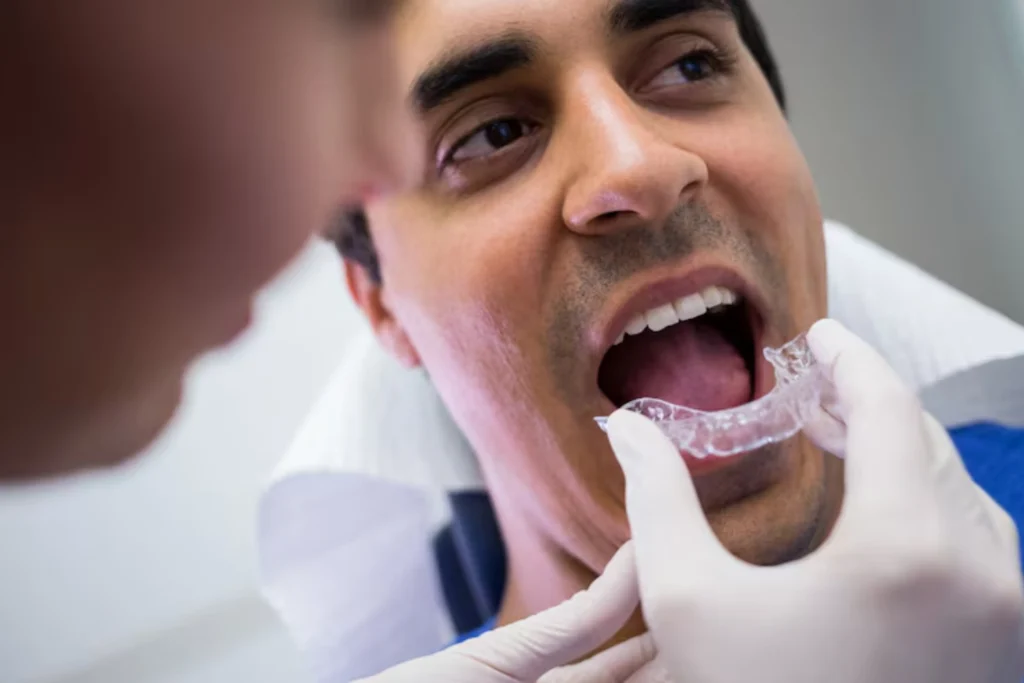
A slight vertical overlap between the upper and lower teeth is normal. An excessive overlap is known as a deep bite, which is different from an overjet where the upper teeth sit too far forward. These two conditions can sometimes occur together, making it difficult to assess the issue without a professional examination. A dentist will assess how the teeth come together from different angles, including the front, side and back of the mouth. Whether clear aligners are suitable depends on factors such as bite depth, tooth position, jaw alignment and the type of movement required.
How Clear Aligners Correct Certain Types of Overbites
In many cases, clear aligners can improve mild to moderate overbites caused mainly by tooth position. The trays work by applying controlled pressure to move specific teeth gradually into better alignment and create a more balanced bite over time.
Some treatments may involve tooth-coloured attachments that help the aligners grip the teeth more effectively. In certain cases, elastics may also be recommended to help coordinate the movement of the upper and lower teeth during treatment and improve the overall correction process.
When Clear Aligners Are the Right Treatment Option
Aligners tend to suit cases where:
- The problem is mainly caused by tooth position
- The gums and supporting bone are healthy
- The required movements are predictable
- The patient can commit to wearing the trays as directed
Two people may appear to have a similar smile but require completely different treatment approaches. Suitability depends on a clinical assessment rather than appearance alone.
Why Every Overbite Requires Individual Assessment

An overbite can develop due to tooth position, jaw development, or a combination of both. Age can also influence treatment planning, particularly for children and teenagers whose jaws are still developing. Understanding the underlying cause of the bite issue helps determine whether clear aligners are the right approach or if another treatment option may provide better results.
For adults with a significant skeletal difference, clear aligners may not always provide the level of correction required. Regular dental check-ups during childhood allow dentists to identify bite concerns early and monitor changes as the mouth develops.
The Checks Needed Before Starting Clear Aligners
| What is checked | Why it matters |
| Tooth overlap | Shows how deep the bite is |
| Jaw relationship | Reveals whether the problem is skeletal |
| Gum and bone health | Confirms whether teeth can be moved safely |
| Crowding and spacing | Affects where teeth can move |
| Wear habits | Shows whether aligners will be worn consistently |
Clear aligner treatment relies heavily on consistent wear. Removing trays for extended periods can slow progress and affect the final result. Most aligner treatments require wearing trays for around 20 to 22 hours per day.
Why Treating a Deep Bite May Protect Your Oral Health
Not every overbite causes immediate problems. However, a deeper bite can place additional pressure on certain teeth or cause the lower teeth to contact the gum behind the upper teeth. Over time, this may contribute to uneven wear, tooth sensitivity, jaw discomfort or damage to the edges of the teeth. Addressing these concerns early can help prevent further strain on the teeth and support better long-term oral health.
Common Signs of a Deep Bite or Overbite Issue
Signs worth checking include:
- Lower front teeth becoming harder to see
- Chipped or flattened tooth edges
- Gum soreness behind the upper teeth
- Jaw discomfort during chewing
- A bite that feels increasingly tight
While improving the appearance of the smile is an important goal, aligner treatment is designed to improve function as well. Straightening teeth alone does not always correct the underlying bite problem.
Treatment Options for More Complex Bite Problems
Clear aligners are not the ideal solution for every overbite. More complex cases involving significant tooth movement, severe deep bites or jaw-related concerns may be treated more predictably with traditional braces or a combined approach.
Dental Braces provide continuous pressure and do not rely on patients remembering to replace removable trays after eating or cleaning. However, clear aligners treatment offer benefits such as easier cleaning and the ability to remove them during meals. The most suitable option depends on the type and complexity of the bite correction required, not simply the appearance of the teeth.
Steps Involved in Correcting an Overbite With Aligners
Treatment usually begins with a dental assessment, photographs and a digital scan of the teeth. X-rays may also be required to evaluate the roots, supporting bone and jaw relationship before creating a personalised treatment plan. A series of clear aligners is then designed, with each set making small adjustments to gradually move the teeth. The trays are removed during meals and should be cleaned before being placed back in the mouth to prevent plaque and food build-up.
Regular review appointments allow the dentist to monitor progress and make adjustments if needed. Once treatment is complete, retainers are required to help maintain the results and prevent teeth from shifting back. The final result can create a more balanced smile, but outcomes vary depending on the individual bite, treatment needs and commitment to wearing aligners.
Conclusion
At Twilight Dental, an overbite assessment looks beyond how the front teeth appear. The dental team evaluates bite depth, tooth position, gum health and overall function to determine whether clear aligners can provide a predictable result for patients in Ipswich.
Clear aligners can correct certain overbites while improving the appearance of your smile. The key factor is not just how discreet the aligners are, but whether they can achieve the tooth movements your specific bite requires.