
A chipped tooth and a missing tooth may both affect the appearance of a smile, but the treatment approach for each is completely different. A chipped tooth can often be improved while preserving the natural tooth, whereas a missing tooth requires a replacement solution designed to restore both function and appearance.
Although veneers and implants can both enhance a smile, they address different dental concerns. Choosing between the two depends on the condition of the tooth, the surrounding structures and whether the natural tooth can be preserved or needs to be replaced. The right option begins with understanding the underlying dental need rather than simply comparing cosmetic results.
Why Veneers and Implants Are Not the Same
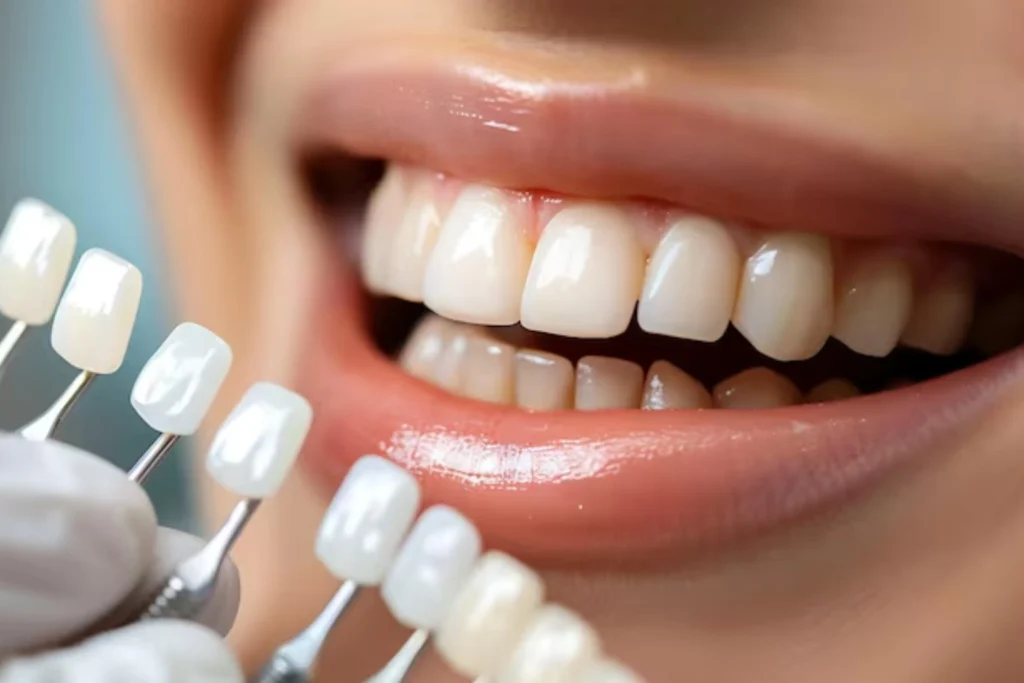
Both treatments can enhance a smile and may involve custom porcelain restorations, but their purpose and application are very different. A veneer covers the visible front surface of an existing tooth. An implant, on the other hand, replaces a tooth that has been lost or cannot be restored, with the implant placed into the jawbone to support a crown above the gumline.
Choosing between veneers and dental implants is not about selecting the treatment that appears stronger or more advanced. Each option is designed to solve a different dental concern.
What Each Treatment Is Designed To Replace
| Treatment | What remains in the mouth | Main purpose |
| Veneer | The natural tooth and root | Changes the front colour, shape or proportion |
| Dental implant | No natural tooth at that site | Replaces the missing root and visible tooth |
| Crown on an implant | Supported by the implant | Restores chewing function and appearance |
A veneer cannot replace a missing tooth, just as an implant would not normally be considered for a healthy tooth that only requires cosmetic improvement. The key consideration is whether the natural tooth can and should, be preserved.
Which Dental Concerns Can Veneers Improve?
Veneers are generally suitable for teeth that are present and relatively healthy but have visible imperfections, such as stubborn discolouration, minor chips, uneven edges, small gaps, or proportions that appear out of balance with surrounding teeth. Veneers are thin porcelain or resin coverings bonded to the front surface of a tooth to improve its appearance. Before treatment begins, the dentist must confirm there is no active decay, assess gum health, check enamel thickness, and consider whether habits such as teeth grinding or excessive bite pressure could affect the veneer’s long-term durability.
A veneer is not designed to hide active dental problems. A painful or weakened tooth requires proper assessment first and understanding cracked tooth symptoms explains why a tooth that appears normal may still have underlying damage. When suitable, dental veneers are planned around the tooth’s natural shape, bite relationship and surrounding smile rather than applying a standard approach to every patient.
When Implants Are the Right Solution
An implant is generally considered when a tooth is missing or cannot be predictably restored. It replaces the missing root by placing a titanium post into the jawbone and once healing is complete, a custom crown is attached above the gumline. Suitability depends on more than the size of the gap. The dentist will assess gum health, available jawbone volume, general health, medications, smoking or vaping history, bite pressure and daily oral hygiene habits. While implants cannot develop decay, the surrounding gum and supporting bone still require ongoing care, as gum disease can affect implant stability in a similar way to natural teeth.
Patients in Brassall and greater Ipswich considering dental implants typically require diagnostic imaging and a complete assessment before treatment timing and complexity can be determined.
Comparing Veneer and Implant Treatment Times
Veneers are usually completed within a smaller number of appointments. The teeth are assessed, prepared where required and impressions or digital scans are taken for the dental laboratory. Temporary veneers may be placed while the final porcelain restorations are created, followed by a review of the fit, bite and appearance. Implants involve a longer treatment process because healing is an essential part of the procedure. After placement, a period of osseointegration allows the implant to fuse with the jawbone before the final crown is attached. Additional procedures, such as bone grafting, may extend the overall timeframe.
This difference is important when planning treatment. Veneers focus primarily on improving the visible tooth surface, while implants involve surgery, healing and staged restoration. Understanding veneers pros and cons can help patients compare their options, but neither treatment should be rushed simply to meet a specific deadline.
Conclusion
The Brassall clinic supports patients across the Ipswich region with both cosmetic dental concerns and missing teeth, helping determine whether a tooth is suitable for veneers, requires another restorative approach, or needs replacement.
At Twilight Dental, treatment decisions consider the condition of the tooth, gum health, bite and long-term maintenance requirements. The goal is not to compare two unrelated treatments, but to preserve healthy teeth wherever possible and replace missing teeth appropriately when needed.