

For patients with significant dental anxiety, IV sedation can make necessary treatment considerably more manageable. The main benefits of IV sedation include deep relaxation, little or no memory of the procedure, reduced gag reflex sensitivity and the ability to complete more treatment in a single appointment, all while the patient continues breathing independently under continuous monitoring.
Dental fear affects a substantial proportion of Australian adults and is a common reason for delayed care. Understanding how IV Sedation Dentistry works and who it may suit can help patients decide whether it is worth discussing at their next consultation.
What IV Sedation Involves

IV sedation is a form of conscious sedation in which a sedative medication is delivered through a small cannula, usually placed in the hand or arm. The Australian Dental Association classifies intravenous sedation as moderate sedation, a drug-induced state in which the patient remains able to respond purposefully to verbal instructions or light touch.
It is not a general anaesthetic. The patient does not become fully unconscious, continues to breathe without assistance and retains protective reflexes. In Australia, dentists who provide this level of sedation must hold an endorsement from the Dental Board of Australia, which requires completion of an approved program of study.
Key Benefits of IV Sedation
The advantages of IV sedation extend beyond comfort alone. For many patients, the greatest benefit is that treatment which once felt impossible becomes achievable.
Deep Relaxation for High Dental Anxiety
The sedative takes effect within minutes of administration, producing a calm and deeply relaxed state. Patients who find the sounds, smells or sensations of a dental appointment distressing often report that these concerns feel distant or no longer register.
Reduced Memory of the Procedure
Medications commonly used for IV sedation can cause partial or complete amnesia for the duration of treatment. Many patients recall little of the appointment afterwards, which may help prevent a difficult experience from reinforcing existing anxiety about future visits.
Better Management of a Strong Gag Reflex
A sensitive gag reflex can make even routine procedures such as impressions, X-rays or fillings difficult to complete. IV sedation often reduces this response, allowing the dentist to work more comfortably while the patient remains relaxed.
More Treatment Completed in Fewer Visits
Because the patient remains comfortable for an extended period, several procedures can often be combined into one appointment. This is particularly relevant when multiple teeth require attention, such as when Wisdom Teeth Problems affect more than one side of the mouth and removal is planned together.
Adjustable and Continuously Monitored
Unlike oral sedatives, which are taken before the appointment and cannot easily be adjusted, intravenous medication can be titrated gradually throughout treatment. Vital signs such as oxygen saturation, heart rate and blood pressure are monitored continuously, so the sedation level can be refined according to the patient’s response.
Support for Longer or Complex Procedures
Extended treatment can be physically and mentally demanding, even for patients without significant anxiety. IV sedation is often considered for surgical procedures such as Dental Implants, where remaining still and relaxed for a longer appointment supports a smoother experience.
How IV Sedation Compares With Other Options
IV sedation is one of several approaches available to anxious patients. Lighter options such as Happy Gas may be sufficient for mild to moderate anxiety, while general anaesthetic in a hospital setting is generally reserved for specific clinical circumstances.
| Feature | Happy Gas | IV Sedation | General Anaesthetic |
| Level of consciousness | Awake and relaxed | Deeply relaxed, still responsive | Fully unconscious |
| Memory of treatment | Usually retained | Often little or none | None |
| Recovery time | Minutes | Several hours | Longer, often hospital-based |
| Driving afterwards | Usually possible | Not permitted that day | Not permitted |
The most suitable option depends on the level of anxiety, the treatment planned and the patient’s medical history. These factors are reviewed together during a pre-sedation consultation.
Who May Benefit Most From IV Sedation
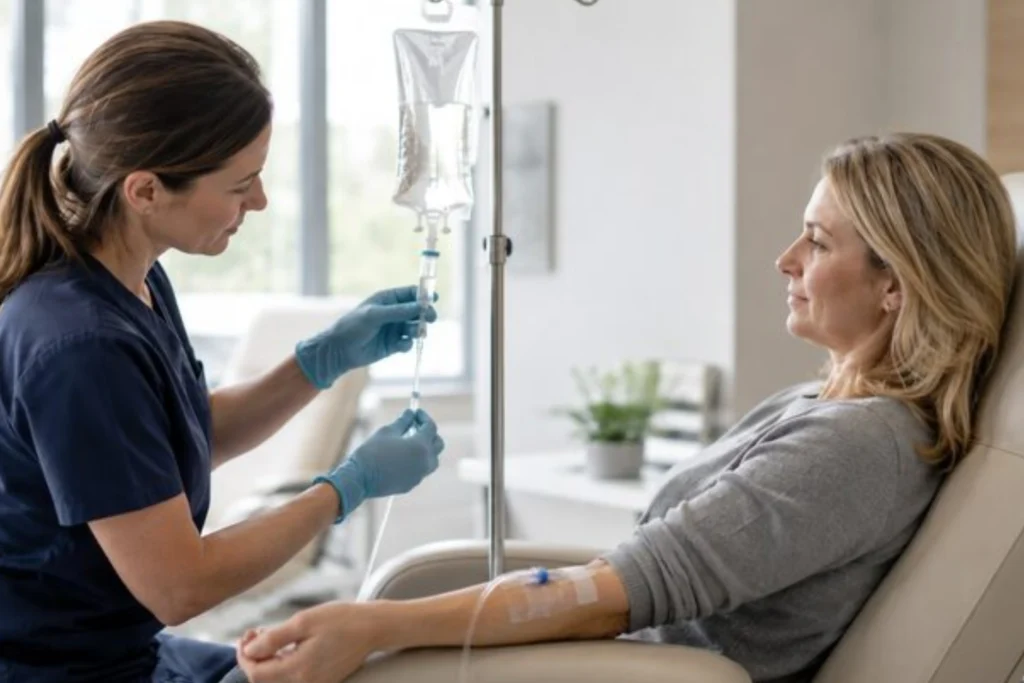
IV sedation is not required for most dental appointments, but it may be worth considering in certain situations. Patients who are commonly assessed for IV sedation include those with:
- High dental anxiety or dental phobia that has led to avoided care
- A strong gag reflex that interferes with treatment
- Several procedures that could be combined into one visit
- Longer surgical treatment, such as extractions or implant placement
- Previous experiences where lighter sedation did not provide enough relief
For patients who have been avoiding care for some time, IV sedation may also provide a practical way to address outstanding treatment before returning to Regular Dental Check-Ups that can then be managed with less apprehension. Once outstanding concerns have been treated, many patients find that shorter preventive visits require lighter support or none at all.
Important: IV sedation is not suitable for every patient. Pregnancy, certain respiratory or cardiac conditions, sleep apnoea and some medications may affect suitability. A professional assessment with an appropriately endorsed dentist, including a full review of medical history, is recommended before IV sedation is considered.
Conclusion
IV sedation offers a well-established way for anxious patients to receive the treatment they need in a calm and closely monitored setting. A thorough consultation helps confirm whether it is appropriate and which level of sedation best suits each situation.
Twilight Dental Brassall provides IV sedation for patients across Brassall, Ipswich and surrounding suburbs, with a free consultation offered before any sedation appointment is arranged. The team can review medical history, explain the process in detail and outline suitable options for each patient.