

A missing tooth can affect more than the appearance of a smile. Food may become trapped in the gap, chewing can shift towards the opposite side and a missing front tooth may influence speech or confidence, while a missing back tooth can gradually alter how bite pressure is distributed. Before comparing dental implants and bridges, it is important to consider the condition of the surrounding teeth. A nearby tooth with underlying damage can change the treatment plan, which is why understanding cracked tooth symptoms is important before relying on a neighbouring tooth to support a bridge.
Choosing Between a Dental Bridge and Implant
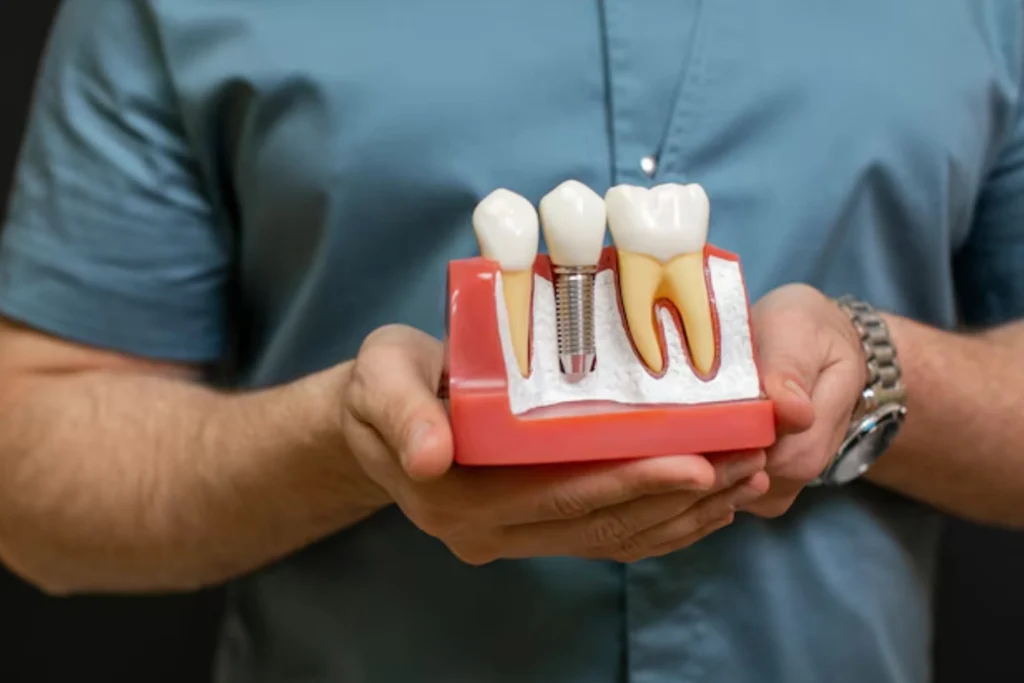
There is no single answer when deciding between a dental bridge and dental implant. A bridge relies on the teeth beside the gap for support, while an implant replaces the missing tooth root with a fixture placed in the jawbone, which then supports a crown. The practical differences between a bridge and an implant become clearer when the condition of the surrounding teeth, gums and bone is considered.
| Point to compare | Dental bridge | Dental implant |
| Main support | Teeth beside the gap | Jawbone |
| Surgery | Usually not required | Required |
| Nearby teeth | May need preparation | Usually left untouched |
| Treatment time | Often shorter | Usually longer |
| Cleaning | Requires cleaning under the bridge | Requires cleaning around the implant crown |
The location of the missing tooth also influences the decision. Appearance may carry greater weight near the front of the mouth, while bite force becomes a more important consideration around the molars. The available space, gum shape and bone volume can all affect which option is realistic for an individual case.
What Factors Affect the Choice Between a Bridge and Implant?
Why the Health of Supporting Teeth Matters
A traditional bridge typically depends on the teeth on either side of the gap. Those teeth may need to be reshaped so crowns can support the replacement tooth.
This approach can be reasonable when the supporting teeth already have large fillings or crowns. It warrants closer consideration when both teeth are otherwise healthy and untouched, as preserving sound tooth structure may then become a more important factor in the decision. The condition of an existing crown, filling or cracked tooth can also influence which option is appropriate. A bridge ultimately depends on the strength and condition of the teeth supporting it.
Why Bone and Gum Health Matter for Implants
An implant requires sufficient healthy bone for placement, while the surrounding gum tissue must also be assessed. A tooth that has been missing for an extended period may leave less bone available than initially expected. Signs such as bleeding gums, swelling or persistent tenderness should be assessed before restorative treatment proceeds, as early gum disease can cause changes that are easy to overlook when they first develop.
What Is Involved in Bridge and Implant Treatment?
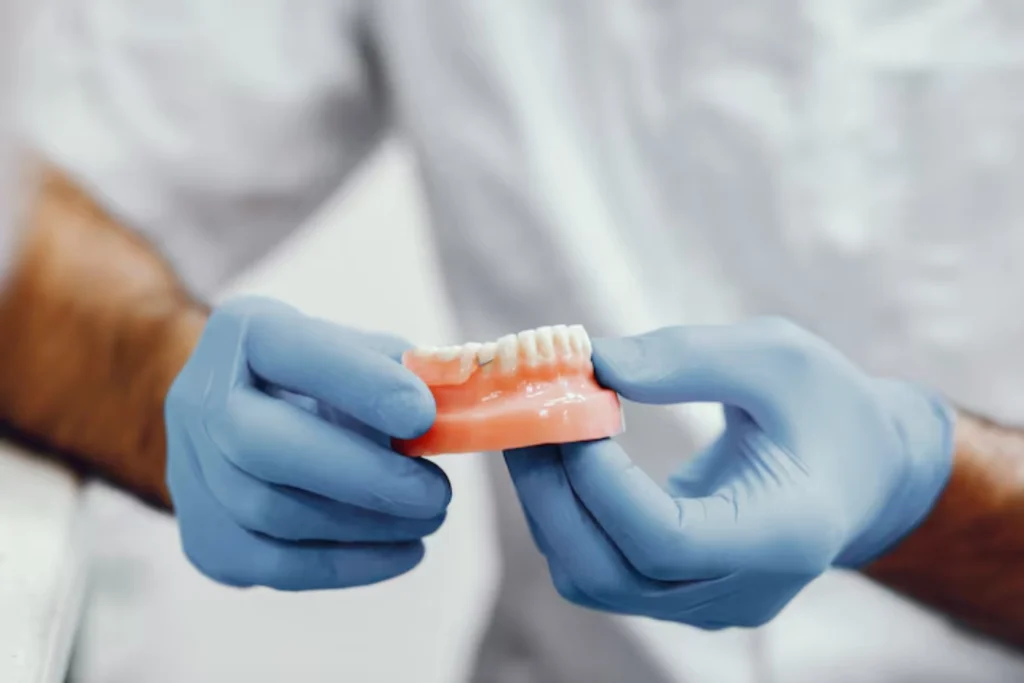
A dentist will assess the teeth, gums, bite and jawbone surrounding the gap. X-rays or scans are often required to evaluate bone volume and identify any underlying concerns. A typical assessment may include:
- Nearby tooth health
- Gum condition
- Available jawbone
- Bite pressure or grinding
- Medical history
- Treatment timeframe
Preparing the Teeth and Jaw for Treatment
For a bridge, the supporting teeth must be sufficiently strong to carry the replacement tooth. They are prepared before impressions or digital scans are taken to create the final restoration. The condition of these teeth is an important part of deciding whether a bridge is appropriate.
Dental implants follow a different process. The implant is placed into the jawbone and allowed time to heal before the final crown is attached. The healing period allows the implant to integrate with the surrounding bone and provide stable support for the replacement tooth.
When a Bridge May Be More Suitable
A bridge may be appropriate for patients who wish to avoid implant surgery or who cannot undergo implant treatment for medical or anatomical reasons. It can also be a practical option when the teeth beside the gap already require substantial restorative work.In such cases, treatment involving dental crowns may already form part of the plan, making it more sensible to use those teeth for bridge support rather than preparing otherwise healthy teeth solely for that purpose.
Cost and treatment duration are also relevant considerations. A bridge is generally completed sooner because there is no implant healing period, although this benefit must be weighed against the condition of the supporting teeth.
When a Dental Implant May Be the Right Choice
An implant may be considered when the neighbouring teeth are healthy and sufficient bone is present at the missing tooth site. It functions independently rather than relying on adjacent teeth for support.This can be particularly beneficial for a single missing tooth surrounded by healthy natural teeth, as the implant transfers chewing forces directly into the jawbone through its own support structure.
Implant treatment, however, is not automatically suitable for every patient. Bone volume, gum health, healing capacity and bite forces all require assessment and some patients may need additional procedures before implant placement becomes viable.
Conclusion
A missing tooth is rarely a simple gap to fill. The surrounding teeth may be heavily restored, entirely healthy or already compromised and the underlying gum and bone can present an equally varied picture.
Twilight Dental can assess these factors for patients in Ipswich and the surrounding region. The objective is not to select the most advanced treatment available, but to identify the option best suited to the existing teeth, bone, gums and long-term maintenance requirements, with the least unnecessary intervention.