

New Invisalign patients often have the same question before their first meal after getting fitted: can you eat and drink with Invisalign, or should the trays be removed every time? The uncertainty is understandable. Clear aligners provide more flexibility than traditional braces, though braces remain effective for teens in many cases, but that convenience still comes with important guidelines that protect the trays and help treatment progress as planned.
Understanding what can be eaten and consumed with Invisalign in place and which foods or drinks require removing the trays first, helps prevent avoidable issues such as staining, damage, or unnecessary delays during treatment.
Should You Remove Invisalign Before Eating?
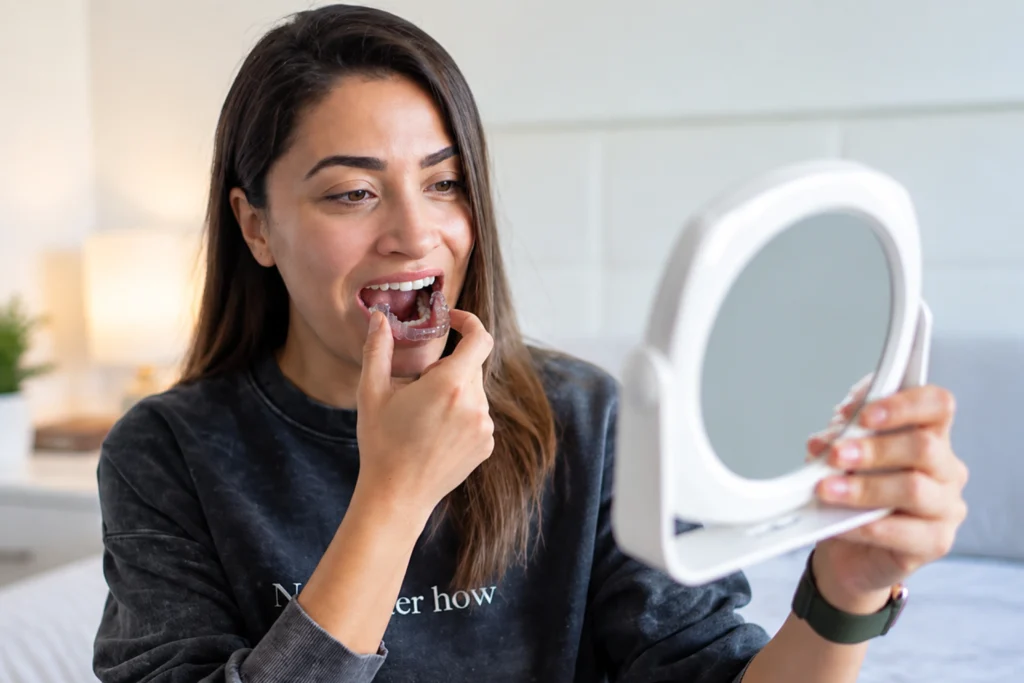
Water is the only exception to the general rule: aligners should be removed before consuming anything else. Invisalign trays are designed to be worn for around 20 to 22 hours each day, so making removal part of every meal routine helps maintain the consistent wear time required for effective tooth movement.
Chewing with aligners in place, even with softer foods, can put unnecessary pressure on the plastic and increase the risk of cracks or distortion. While a single mistake may not immediately damage a tray, repeated habits can affect the aligner’s fit and its ability to apply the correct pressure throughout treatment.
How Food and Drinks Affect Invisalign Trays
The guidelines around eating and drinking with Invisalign are directly connected to how the aligner material is designed to work. The trays apply controlled pressure to gradually shift teeth into position, making it important to maintain their original shape and fit throughout treatment.
Heat can interfere with this precision, as hot drinks such as coffee or tea may soften the plastic and affect how the tray sits against the teeth. Dark-coloured beverages can contribute to staining, while acidic or sugary drinks may increase the risk of enamel issues and dental cavity development when they become trapped between the teeth and aligner. Avoiding food particles under the trays also helps limit bacterial buildup, as the enclosed environment between the aligner and teeth can create conditions where harmful bacteria are more likely to develop.
The Best Way to Eat and Drink With Invisalign
Once the routine becomes familiar, how to eat and drink with Invisalign becomes a straightforward part of daily life. The process mainly involves removing the trays before meals, cleaning your teeth afterward and placing the aligners back in properly to continue treatment as planned.
Foods You Can Eat During Invisalign Treatment
Since Invisalign trays are removed before eating, there are generally no food restrictions during treatment. Foods such as apples, popcorn, nuts and crunchy or sticky options can still be enjoyed because they do not come into contact with the aligners. Unlike traditional braces, there are no brackets or wires that can trap food or risk damage while chewing.
Drinks to Avoid While Wearing Invisalign
Plain water is the only drink considered safe while wearing Invisalign trays. Other beverages should be consumed after removing the aligners, followed by cleaning your teeth before placing the trays back in.
| Drink | Safe With Aligners In | Why |
| Plain water | Yes | No sugar, staining, or heat |
| Coffee or tea | No | Heat may affect fit and pigments can stain trays |
| Soda or juice | No | Sugar and acidity can affect enamel |
| Wine or alcohol | No | Pigments and acidity may stain or affect trays |
| Sparkling water | No | Acidity may still affect enamel |
Risks of Eating and Drinking With Invisalign Trays
Occasionally forgetting to remove aligners before eating is unlikely to cause significant issues. However, repeating this habit can create problems that affect aligner condition, oral hygiene and overall treatment progress.
Common problems include:
- Cracked or warped trays that no longer maintain the correct fit
- Discoloured aligners that become yellow or cloudy before replacement
- Increased cavity risk caused by trapped bacteria and food particles
- Reduced daily wear time that may delay treatment progress
- Additional appointments required to replace damaged trays
How Dentists Help Keep Invisalign Treatment on Track
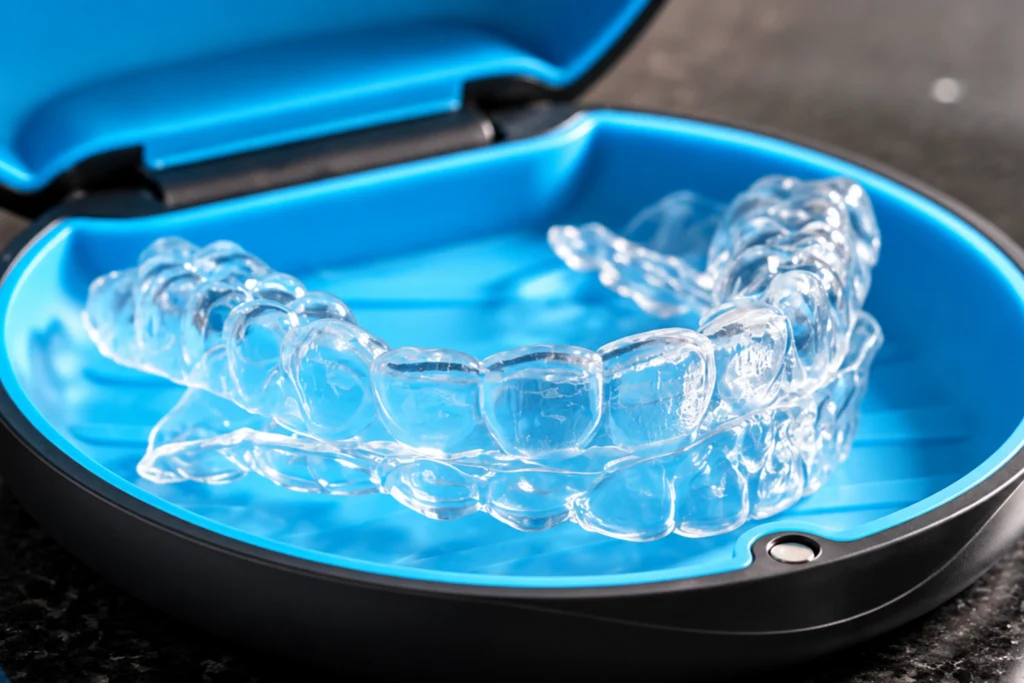
Regular dental supervision is an essential part of successful Invisalign treatment, allowing potential concerns to be identified and addressed before they affect progress. During routine appointments, a dentist evaluates how well the trays are fitting, checks the condition of attachments and reviews any changes in comfort or tooth movement that may require attention. Professional guidance also helps patients understand which concerns require action and which are simply common experiences during treatment. For example, the risk of cavities with Invisalign is closely linked to oral hygiene habits and whether bacteria or food particles remain trapped against the teeth for extended periods, rather than a single missed step.
Patients looking for Ipswich dental braces or Invisalign options can benefit from regular appointments, as most Invisalign treatment plans include check-ups every six to eight weeks. These visits give dentists the opportunity to monitor progress, make necessary adjustments and help keep the treatment timeline on track.
Maintaining Invisalign Progress With Twilight Dental
Regular follow-up appointments during Invisalign teeth aligner treatment play an important role in maintaining progress and identifying potential concerns early. Whether a tray is not fitting as expected, an attachment needs attention, or a tooth requires closer monitoring, these routine assessments help ensure treatment continues in the right direction.
For patients throughout the Ipswich region, having convenient access to ongoing dental support makes it easier to stay consistent with these appointments while balancing everyday commitments. Patients exploring their orthodontic options can learn more through the Invisalign teeth aligners page, which explains the complete treatment process from the initial consultation and digital scan through to progress monitoring and retainer care.
Conclusion
Eating and drinking with Invisalign requires a simple but consistent routine: removing aligners before meals and beverages, keeping them clean and returning them promptly after eating helps protect both the trays and the progress of treatment.
With proper care and regular dental check-ups, patients can maintain their aligners effectively while moving through each stage of their treatment as planned. Twilight Dental provides ongoing guidance and monitoring throughout the Invisalign journey, helping patients address concerns early and achieve comfortable, predictable results.