
Growing older does not mean that dental problems are inevitable. Many older adults retain their natural teeth for life, but changes such as gum recession, reduced saliva flow, ageing dental work and declining dexterity can make seniors’ oral health more difficult to maintain over time. These changes often develop gradually, which means the early signs of poor oral health can be easy to overlook.
Bleeding gums, ongoing bad breath, increased tooth sensitivity or discomfort when chewing may appear before more obvious pain develops. Recognising these changes early can help protect seniors’ oral health and allow problems to be assessed before they become more difficult to manage.
What Affects Dental Health for Seniors as They Age

Age itself is not the sole reason dental problems become more common later in life. Oral health for seniors is influenced by many factors that build over time, including years of chewing, previous dental treatment, medication use and changes in general health. Older Australians are also keeping their natural teeth for longer than previous generations, which means teeth, gums and existing dental work need to remain healthy for many more years.
Common age-related changes may include:
- Gradual gum recession
- Wear around existing fillings, crowns or other restorations
- Reduced chewing comfort where teeth are missing
- Dry mouth linked to medicines or certain health conditions
- Reduced grip strength or mobility that makes brushing and flossing more difficult
These changes do not necessarily indicate disease, but they can increase the risk of dental problems if they are not monitored.
Why Dry Mouth Becomes More Important With Age
Saliva plays an important role in protecting the mouth. It helps wash away food particles, neutralise acids and protect tooth surfaces from decay. When saliva production decreases, teeth can become more vulnerable, particularly around exposed roots, older fillings and other areas where plaque can accumulate more easily.
Dry mouth is relatively common among older adults, and medication is one of the most frequent contributing factors. Some antidepressants, blood pressure medicines, antihistamines and other medications can reduce saliva flow.
Medicines should never be stopped or changed without advice from the prescribing doctor. A dentist can identify the oral effects of dry mouth, while a doctor or pharmacist can review whether medication may be contributing to the problem.
| Change Noticed | Why It Deserves Attention |
| Mouth feels sticky or dry | Reduced saliva can increase the risk of decay |
| Food feels harder to swallow | Dryness can affect comfort when eating |
| Dentures begin to rub | Reduced saliva can make dentures less comfortable |
| New decay develops near existing fillings | Lower saliva flow may leave these areas more vulnerable |
How Gums and Teeth Change With Age
As gums recede, parts of the tooth root can become exposed. Because root surfaces are not protected by enamel in the same way as the crown, they are more vulnerable to sensitivity and decay. Gum health also needs closer attention with age, as bleeding, swelling, persistent bad breath or loose teeth may be signs of early gum disease rather than a normal part of ageing. Identifying these changes early can help prevent gum problems from progressing and affecting the supporting tissues around the teeth.
Gum disease can progress gradually and may cause little discomfort in its earlier stages, which is why routine assessment remains important. This process is explained further in How Gum Disease Develops. Where concerns extend beyond what can be addressed through a routine clean, gum disease treatment may involve a closer assessment of gum pockets, tartar build-up and the level of bone supporting the teeth before treatment is recommended.
How Often Should Older Adults Visit the Dentist?
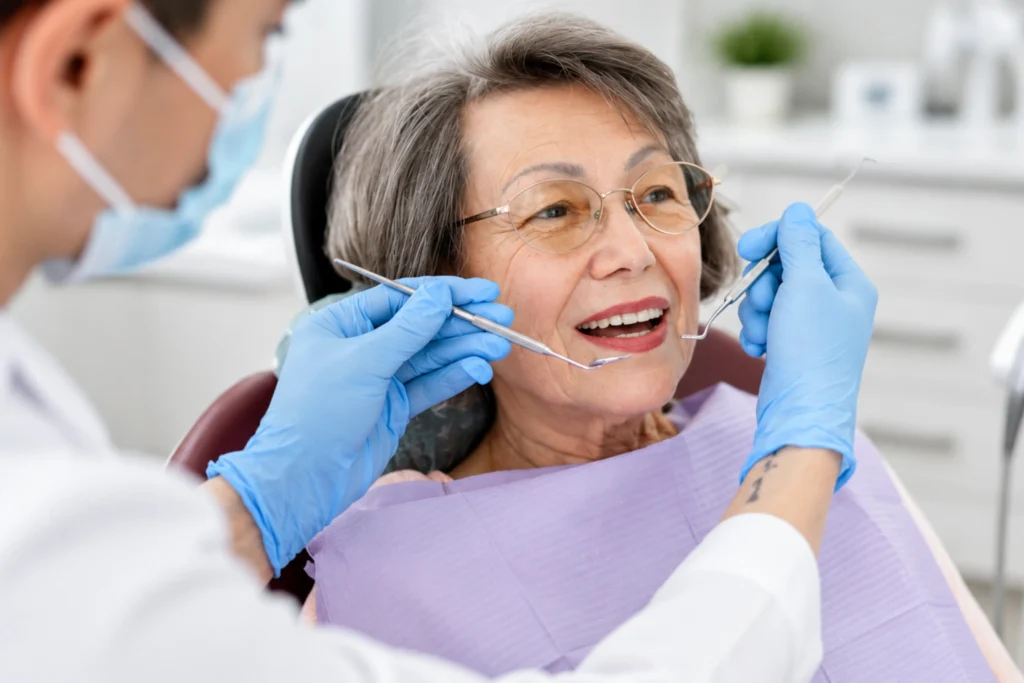
There is no single dental schedule that suits every older adult. Someone with stable teeth and gums may require different recall intervals from a person experiencing dry mouth, active gum disease, recurring decay or problems with crowns, dentures or other dental work.
Regular preventive dentistry appointments allow the dentist to monitor oral health and assess:
- Teeth and gums
- Existing fillings, crowns and other restorations
- Dentures
- Areas that are difficult to clean
- Signs of decay, gum disease or oral tissue changes
- Changes that may be linked to medication or general health
Bringing an up-to-date medication list to dental appointments can also be helpful, as some medicines can affect saliva flow, bleeding and healing.
As people age, dental care often becomes more individual rather than more complicated. The goal is to identify small changes before they begin to interfere with eating, comfort or everyday oral hygiene.
Bottom Line
Oral health in later life can be affected by changes in saliva flow, gums, dental work and general health. Twilight Dental supports older adults in Brassall, Ipswich and nearby areas with care tailored to dry mouth, gum changes, denture concerns, medical history and everyday oral health needs. Regular dental reviews can help identify small changes before they become more difficult to manage. This can also support greater comfort when eating, speaking and maintaining daily oral hygiene.