

Plaque and tartar are closely related, but they are not the same. Plaque is a soft bacterial film that forms continuously on the teeth and can generally be removed through regular brushing and interdental cleaning. When plaque remains on the teeth, minerals in saliva can cause it to harden into tartar, also known as calculus, which cannot be removed through routine home care.
The distinction matters because the appropriate approach changes once plaque has hardened. Early Signs of Gum Disease explains what can occur when plaque begins irritating the gums, while this article focuses on how plaque develops into tartar, how the two differ and what can be managed at home versus professionally.
What Is the Difference Between Plaque and Tartar?
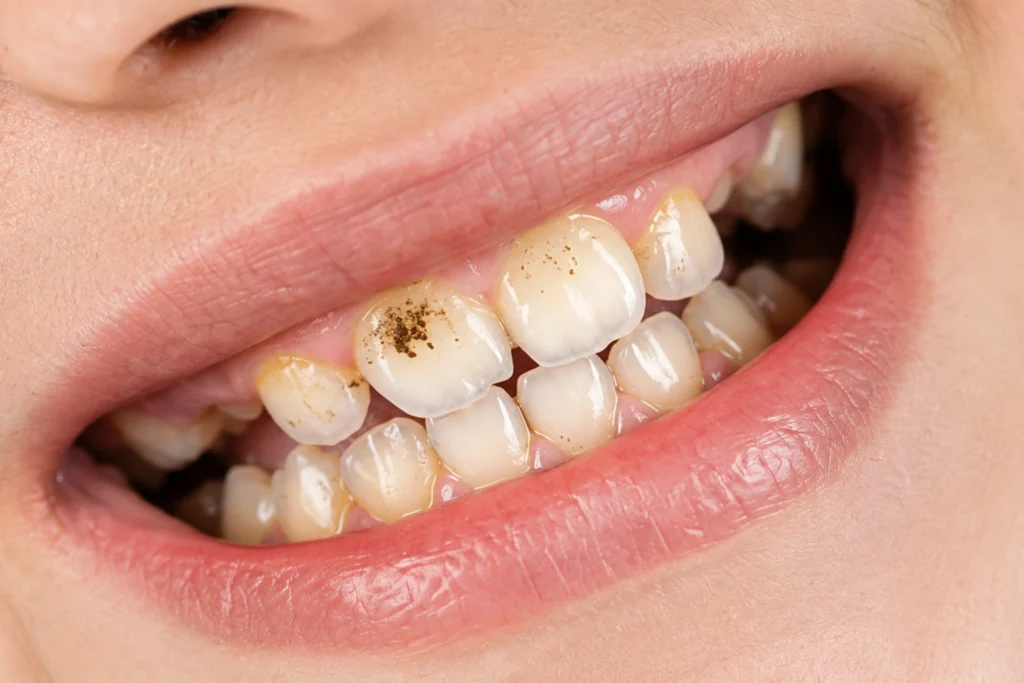
How Plaque Forms on the Teeth
Plaque develops throughout the day and may feel slightly fuzzy or sticky, particularly around the gumline and between the teeth. Because it remains soft, regular brushing and interdental cleaning can disrupt and remove much of it before it has an opportunity to harden. Plaque is not a permanent coating on the teeth. Daily cleaning helps remove it regularly and reduces the time it remains in place before mineralisation can occur.
Visual inspection is not always enough to identify plaque. Buildup can remain around the gumline and between teeth even when the visible tooth surfaces appear clean. This is one reason brushing alone may leave recurring areas of buildup.
What Happens When Plaque Hardens
Tartar forms when minerals in saliva cause accumulated plaque to harden into a firm deposit that brushing can no longer remove. It may appear yellow, cream or brown, although colour alone is not a reliable way to identify tartar. A rough deposit near the gumline that remains after brushing is a stronger indication that plaque has mineralised.
| Plaque | Tartar |
| Soft, sticky film | Hard mineralised deposit |
| Forms continually | Develops from plaque left in place |
| Often difficult to see | May be visible near the gumline |
| Can be removed with daily cleaning | Requires professional dental cleaning |
| Contributes to decay and gum irritation | Creates a rough surface where further plaque accumulates |
The Effects of Plaque on Teeth and Gums
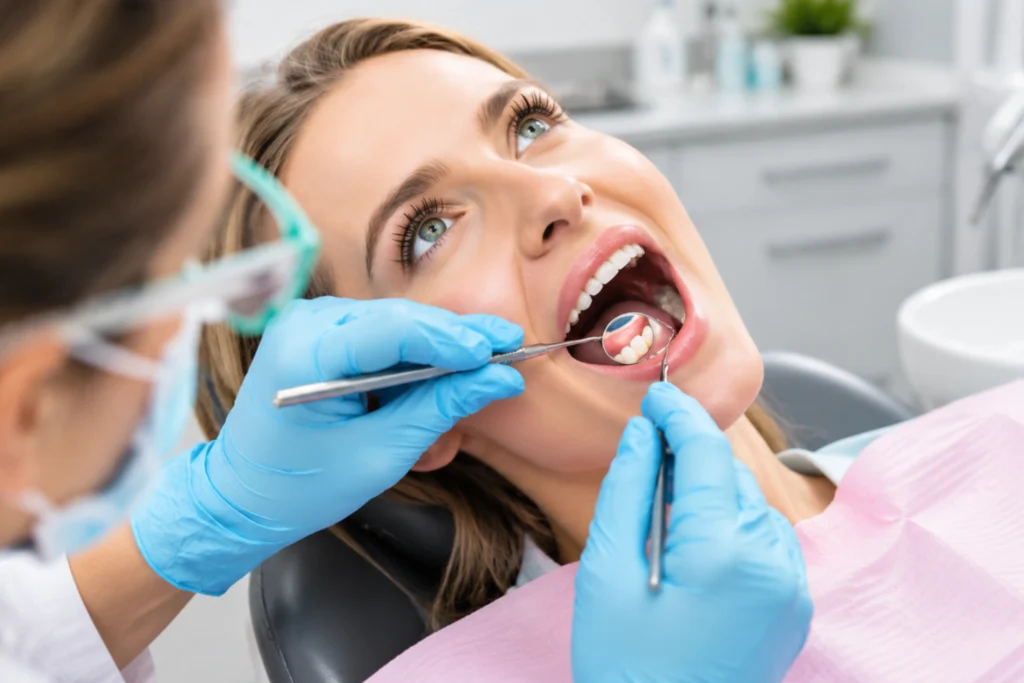
Plaque bacteria use sugars from food and drinks to produce acids that contribute to tooth decay. Along the gumline, these bacteria can also irritate the surrounding tissue, potentially causing redness, swelling or bleeding during brushing. If plaque remains in place, the ongoing bacterial activity can continue to affect both the teeth and gums.
This is why buildup should not be assessed by discomfort alone. Early dental problems can develop without noticeable pain, particularly around the gumline and between teeth where plaque can be difficult to see. Signs of poor oral health include other changes worth monitoring, such as persistent bad breath, sensitivity and gum swelling. Recognising these changes early can help identify problems before they become more difficult to manage.
Why Tartar Requires Professional Removal
Once plaque has mineralised into tartar, brushing and flossing can no longer remove the hardened deposit. Attempting to scrape it away with household tools can injure the gums or damage the tooth surface, which is why established calculus should be removed professionally. Tartar can develop above or below the gumline. Its rough surface can also provide additional areas for plaque to collect. If plaque and tartar remain around the gums, gingivitis can develop and may progress to periodontitis, which affects the tissues supporting the teeth.
Gum Disease Treatment becomes relevant when bleeding, inflammation or deeper gum problems are present. The appropriate treatment depends on the findings of a dental examination rather than the visible amount of tartar alone.
Keeping Plaque Under Control at Home
The approach depends on whether the buildup is still plaque or has already hardened into tartar. Plaque can generally be controlled through consistent home care, whereas tartar cannot be removed with brushing or flossing once it has formed.
Effective plaque control typically includes:
- Brushing twice daily with fluoride toothpaste
- Cleaning between teeth with floss or another suitable interdental aid
- Paying particular attention to the gumline and back teeth
- Limiting the frequency of sugary foods and drinks
- Replacing a worn toothbrush or brush head at regular intervals
Australian oral health guidance recommends brushing twice daily with fluoride toothpaste to help control plaque and reduce the risk of tooth decay and gum disease.
An inconsistent brushing technique can leave the same areas untouched over time. Behind the lower front teeth, around crowded teeth and near the back molars are common areas where buildup can be missed.
Final Guidance
Plaque forms naturally throughout the day, but regular brushing and interdental cleaning can prevent much of it from remaining on the teeth long enough to harden. Once tartar has formed, professional cleaning is needed to remove the deposit safely.
Twilight Dental can assess tartar buildup and gum health, provide professional cleaning where required and identify factors that may contribute to recurring buildup.