

A tooth may appear structurally intact while decay develops beneath the surface, between adjacent teeth or within deep occlusal grooves. Pain is not a reliable early indicator. By the time discomfort arises, decay has often progressed beyond the enamel.
This asymptomatic progression underscores the importance of regular dental checkups. Patients maintaining consistent oral hygiene may still develop early decay in posterior teeth without noticing symptoms. Detecting decay before it becomes symptomatic allows for smaller, more conservative interventions, a principle that applies equally to early paediatric dental care.
How Tooth Cavities Develop Over Time
A cavity represents an area of tooth structure damaged by decay. Plaque bacteria metabolise dietary sugars and produce acids that demineralise enamel. Repeated acid exposure weakens the tooth surface until a cavity forms. Saliva and fluoride can help remineralise very early enamel changes, but once the surface breaks down, restoration is necessary.
An early dental cavity may appear as a chalky white lesion on the enamel or develop between teeth where it is not visible. Brown or black discolouration can appear at later stages, though staining alone does not indicate decay.

Detecting Early Dental Cavities
Some cavities produce no symptoms. Others trigger brief, sharp sensitivity to cold, heat or sweet stimuli that resolves when the trigger is removed. As decay advances, discomfort may persist or appear during chewing.
Clinical indicators may include:
- Sensitivity to hot, cold or sweet foods
- Palpable rough areas on the tooth surface
- Food consistently lodging in a specific location
- Pain while biting or chewing
- Recurring, unexplained discomfort
- Localised swelling or unusual taste near the tooth
Dental cavity pain does not reliably indicate the depth or extent of decay, as similar symptoms may result from fractures, compromised restorations or root exposure. Bleeding or inflamed gums are more commonly associated with early gum disease and should be assessed promptly by a dentist.
Identifying Decay Requires Expertise
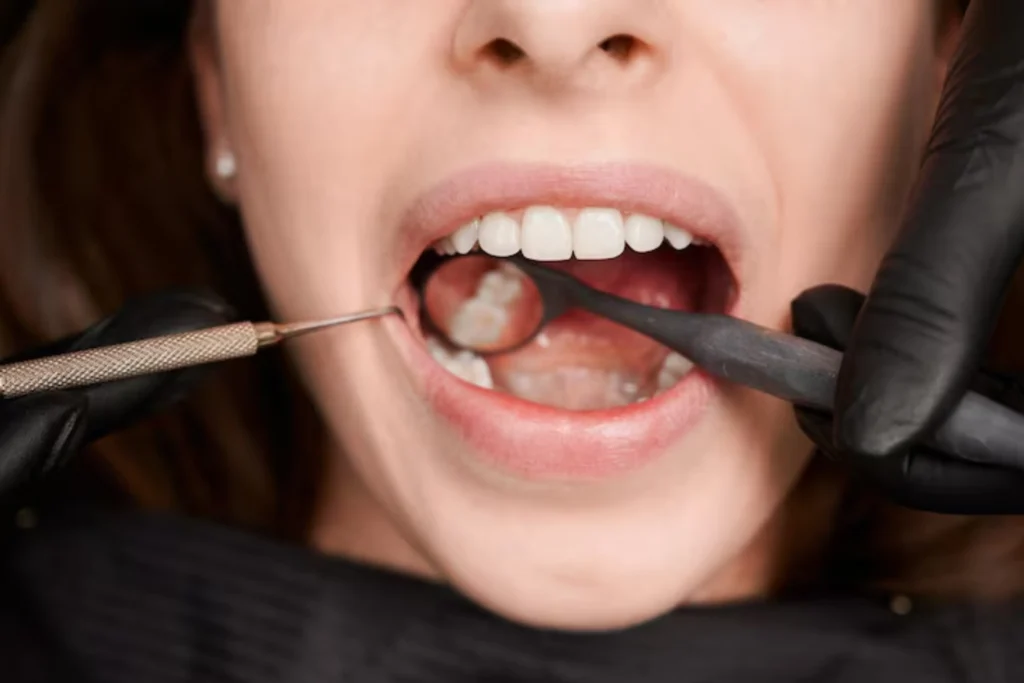
A darkened line within a molar groove does not necessarily indicate decay. Staining can occur in deep fissures even with good brushing. Definitive diagnosis, differentiating staining, demineralisation and structural damage, requires a clinical examination under proper lighting and, where appropriate, radiographs.
Stages of Untreated Decay
Once established, decay progresses through enamel into dentine at an accelerating rate. If bacteria reach the pulp, persistent tooth pain, infection or abscess can develop. Significant swelling, fever, facial swelling or difficulty swallowing indicates the need for urgent dental assessment.
Treatment Options and Dental Cavity Cure
No single dental cavity cure applies to all stages of decay. Early enamel demineralisation may respond to fluoride application, improved plaque control and reduced sugar exposure. Once cavitation occurs, restoration is required.
Treatment depends on the depth and location of decay:
- Fluoride therapy for early enamel demineralisation
- Filling for small to moderate cavities
- Crown when substantial tooth structure is compromised
- Root canal therapy if decay reaches the pulp
- Extraction if the tooth cannot be restored
A dentist should confirm the decay stage before starting treatment. Home remedies may offer temporary relief but do not resolve decay or restore damaged structures. In cases where decay has reached the pulp, a root canal treatment may be necessary to preserve the natural tooth and prevent further complications.
Effective Cavity Prevention Tips
Cavity prevention relies on consistent daily habits. Adequate fluoride exposure, interdental cleaning and intervals between meals for saliva to neutralise acidity all support long-term dental health.
Recommended measures include:
- Brushing twice daily with fluoride toothpaste
- Cleaning between teeth daily
- Limiting sweet foods and drinks to mealtimes
- Drinking tap water throughout the day
- Scheduling checkups before symptoms appear
- Discussing reduced saliva production with a dentist if relevant
Regular dental visits allow early detection of hidden decay, assessment of oral hygiene technique and targeted fluoride application where clinically appropriate. They also support preventive dentistry practices, helping maintain overall oral health and reduce the likelihood of cavities developing later.
Final Thoughts
Addressing a cavity is easier before pain begins. Visible discolouration, recurring sensitivity or persistent food impaction warrants clinical assessment rather than observation.
Twilight Dental provides comprehensive examinations to identify early surface changes, hidden decay and other causes of discomfort, including radiographic imaging where required, with clear explanations of treatment options for patients across Brassall and the wider Ipswich area.